Birth
Born in Terhathum District, Eastern Nepal; as the eldest son of father Mohan Prasad and Mother Madhumaya Oli
1952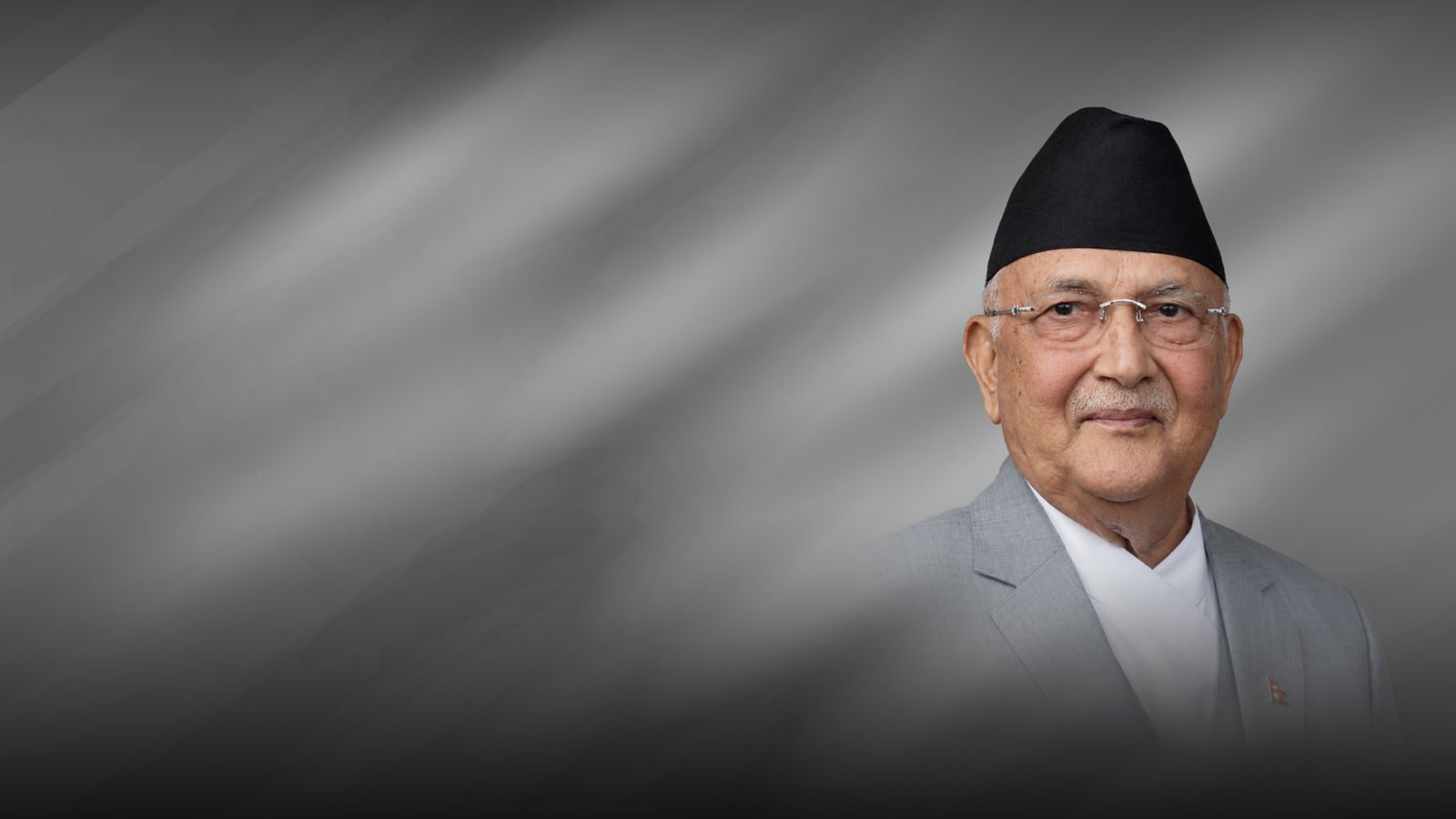
Chairman
K P Sharma Oli's 75-year life may be viewed as unfolding in three distinct phases.
The first phase tells the story of a boy born into a lower-middle-class family who devoted the most vibrant years of his adolescence to the struggle for political rights, social justice, equality and patriotism, sacrificing every prospect of personal comfort. Through a long struggle for democracy, marked by sacrifice, repeated imprisonment, brutal torture and countless encounters with death, he led to bring about a historic transformation of Nepal's political system.
The second phase reflects his journey to institutionalise the democratic system, protect national sovereignty, translate democratic principles into practice, defend society from extremism and incitement, and chart a course for improving the well-being of Nepali people.
Throughout these both phases of his life, Oli emerges as a leader relentlessly engaged in resisting the misuse of institutions established under the democratic system, defending Nepal's sovereignty and national dignity, strengthening and expanding the country's geopolitical standing, laying the foundations for long-term development programmes and infrastructure projects, and initiating structural reforms in social protection. In pursuing these objectives, he encountered numerous obstacles and endured countless painful setbacks.
Even as a wide range of initiatives were being advanced to realise the national aspiration of ‘Prosperous Nepal, Happy Nepali’, he increasingly became the target of sustained attacks in many forms—through competing narratives, political campaigns and many other forms and means.
Beyond these visible dimensions of Oli's life lies another, more subtle part—the depth of his intellect and the gravitas it commands. It is this quality that has elevated K P Sharma Oli beyond the identity of a communist party leader, giving rise to the broader public persona of ‘K P Baa’—a fatherly presence.
His natural ease in engaging with people, his genuine interest in every sphere of society—from professional life to the creative arts—his habit of rigorous study and his distinctive style of open dialogue have made him a figure who commands the attention of both admirers and critics alike. It is for this reason that while his supporters have embraced him in their hearts, even his opponents have found themselves compelled to keep him in their minds.
It is this very combination of social influence and intellectual stature that have repeatedly united both visible and invisible centres of power in opposition to Oli. His influence appears to have been perceived as a source of apprehension by his political opponents, making him perhaps the most persistently demonised figure in contemporary Nepali politics.
K P Sharma Oli's rise to the pinnacle of politics was forged through a 60-year political journey marked by relentless struggle and recurrent confrontations with death. He endured 14 years of imprisonment, together with severe torture and state repression. Yet, from the moment he first assumed the leadership of the government, he initiated an agenda of development and prosperity that elevated the country's development trajectory to a new level. The political journey that eventually led Oli to become the President of the country's largest political party and the Prime Minister began not from a position of privilege, but as an ordinary cadre of a banned political party, advancing step by step under the constant shadow of death.
Most recently, at the 11th National Congress of the CPN (UML) held in December 2025, Oli was elected party President for a third term. Earlier, at the party's 10th National Congress, held in Chitwan on 26 November 2021 in the presence of hundreds of thousands of participants, he had been re-elected as party President for a second term.
Addressing the closed-door session of the Congress before the election, he said:
“I have come through repeated periods of failing health and several highly complex surgeries. I cannot say how long I will live. But today I feel a deep sense of satisfaction, because I see you before me. When I look at your determined faces, I see the future of the country secure. I see the future of the movement secure. I see the future of our party secure. I see the future of democracy secure. And, above all, I am convinced that the journey towards prosperity will continue safely and with certainty.”
This statement reflects Oli's demonstrated commitment to the principle that, in a democracy, ultimate authority rests with the people, just as, within a political party, it rests with its members. His commitment to democracy does not depend solely on his public declarations. His own life—marked by a long, harsh, and painful struggle for democracy—stands as a lesson worthy of study. Having dedicated himself to the democratic movement at the risk of death itself, his life bears testimony to that commitment. Earlier, in August 2014, Oli was elected President of the CPN (UML) for his first term.
Only three months before the 11th National Congress, the country witnessed a devastating assault in which key and sensitive state institutions were set ablaze, leading to the removal of the government headed by Oli. The assault—prepared over a long period by forces operating without an identifiable leadership—cast uncertainty over the development gains that had only recently begun to take root and marked the beginning of attacks on the democratic system itself. Unconstitutional and unlawful political manoeuvres are being staged to divert public attention away from the real problems facing the people.
During his tenure as Prime Minister, the national discourse centred on development projects and infrastructure building. That discourse has since faded, giving way instead to the distractions of inconsequential gimmicks played out on social media.
The government under the leadership Oli pursued an ambitious agenda to transform the lives of the people by making Nepal a modern, prosperous, and well-equipped nation. The policies adopted by his government had begun to reveal the contours of a long-term vision for national self-reliance. The initiatives launched by his government were of far-reaching significance. Against a political landscape long overshadowed by despair, uncertainty, poverty, and underdevelopment, a new national discourse began to emerge—one centred on hope, confidence, national prosperity, and the well-being of the people.
However, following the removal of his government, most of those development initiatives were brought to a halt. Nepali politics, rather than remaining focused on improving the lives of the people, has increasingly been reduced to empty political theatrics designed to provoke reactions on social media.
The following statement, made after he left office, illustrates how Oli's political thinking differs from prevailing political narratives:
“We were not removed from government because we had lost the people's mandate, because we lacked public support, because we were incapable of governing, or because we had failed. We were removed through a conspiracy and by unconstitutional means, involving forces that should neither participate in politics nor be allowed to interfere in it. That is why the country has been passing through a period of instability and uncertainty. My concern is not that we are no longer in government; my concern is that the country has been pushed backwards.”
K P Sharma Oli's political journey was forged in the crucible of the Jhapa Uprising and the hardships of an uncompromising underground struggle. At its core lay the ideals of patriotism, democracy, social justice, equality, and public awakening.
The communist movement in Nepal emerged from aspirations for patriotism, democracy, social transformation, and national development. Throughout his political career, Oli has sought to align those ideals with his actions. Whether as a political prisoner living under the constant threat of death imposed by an authoritarian regime or as the country's Prime Minister seated in Singha Durbar, he remained committed to the same purpose.
During his tenure in government, he led Nepal through the blockade imposed on the country. By concluding the Transit and Transport Agreement with China, his government acted to reduce Nepal's vulnerability to future blockades. While serving as Prime Minister, his government also issued a new official map of Nepal incorporating the territories of Kalapani, Limpiyadhura and Lipulekh, which it regarded as reaffirming the country's sovereign territorial claims, while simultaneously pursuing diplomatic efforts to recover the disputed territory. The momentum his government gave to infrastructure development, together with the expansion of social protection programmes, offers a glimpse of the continuity between the ideals that inspired Nepal's communist movement and the policies pursued under his leadership.
Oli has said:
“From the very beginning, we have carried forward the cause of patriotism and the responsibility it entails; the cause of the democratic movement and the obligations it demands; and the cause of social awakening and transformation. We have consistently advanced all three. Today, our party is firmly established—with clarity, purpose, and standing—in shaping national and international policies, practices, and relationships across each of these three aspects.”
K P Sharma Oli was born on 23 February 1952 into an ordinary peasant family at Iwa village of Athrai in the eastern hill district of Tehrathum. At the age of four, he lost his mother and was deprived of a mother's love at an early age. Following her death, he was raised by his grandmother, whose care and affection shaped his childhood.
Like many children growing up in rural peasant households, Oli assumed family responsibilities from an early age. He tended cattle, cut grass, cooked meals, washed dishes, and carried out almost every household chore.
Asked about his childhood in a television interview, Oli recalled:
“There were no daughters in our family at that time. Only my grandmother remained. Whenever I saw her sweeping the courtyard, I felt I should learn to sweep as well, and so I did. When I saw her plastering the floor with clay, I learnt to do that too. Watching her wash the dishes, I began washing them myself. Gradually I learnt almost every household chore she performed. After my Bratabandha ceremony, I also learnt to cook. From cooking and washing dishes to chopping vegetables, grinding spices, preparing wicks for oil lamps, spinning thread, grazing cattle, cleaning cattle sheds and feeding livestock—I did everything. I genuinely enjoyed both studying and helping with the work at home.”
In 1963, Oli's family migrated from Terhathum to Jhapa. The new surroundings introduced him to new friends and new experiences. Encountering a different social environment naturally gave rise to questions about the customs of society and the events unfolding around him. His inquisitive nature, coupled with a habit of questioning almost everything, led him to seek answers to the inequalities, discrimination, and injustices he witnessed in society.
On the one hand were the questions beginning to take shape in his young mind; on the other were the new friendships he had formed. Together, they nurtured the beginnings of his political consciousness.
It was in this context that, at the age of 15, in 1966, he joined a Marxist study group. Its principal organiser was Ram Nath Dahal. Dahal was later taken by the Panchayat regime into the Sukhani forest on the pretext of being transferred to another prison, where he was executed by firing squad. He is remembered as one of the martyrs of the Jhapa Uprising.
Just two years after joining the Marxist study group, Oli became a full-time political activist. He was only 17 years old when he committed himself to full-time politics in 1968. Within a year, in early 1970, he became a member of the Communist Party of Nepal. The very year he received his party membership, he was arrested for the first time. Over the following four years, he was arrested by the authorities on ten separate occasions.
After the family settled in Jhapa, Oli's father leased land belonging to a local school and took up farming. The family earned a comfortable livelihood from the land until flooding from a nearby river washed it away. Almost overnight, a family that had enjoyed a stable income was pushed to the brink of landlessness. During this period, apart from carrying heavy loads, Oli worked alongside his father in the fields, helping with the family's farming activities.
Reflecting on his family's circumstances, Oli recalled:
“I was going to school while also working. Apart from carrying heavy loads, which I simply wasn't strong enough to do, I did every kind of work. After the river washed away our farmland, we gradually began buying small plots of land again. When we were farming the school's land on lease, our financial situation was very strong. At that time, we were relatively well-off farmers. Later, however, we became poor farmers, and at one point we were reduced to the brink of landlessness.”
Although the family's deteriorating financial condition demanded his contribution, by then Oli had already committed himself to the underground political movement, leaving little opportunity to focus on supporting the household. Recalling those years, he said:
“I could not devote myself to improving my family's situation because I had already committed myself to politics. That made life somewhat difficult for my father.”
The family's loss of its leased farmland to the river coincided with Oli's decision to become a full-time cadre of the communist party. Together, these events became the seed of his political journey. They illustrate the idea that enduring achievements often emerge from adversity. It was around this same period, in 1971, that Oli was appointed head of the Jhapa Uprising Committee—a movement whose legacy would later provide the foundation for today's Communist Party of Nepal (UML).
It marked a decisive turning point. From that moment onward, Oli's personal and family life became increasingly uncertain, while his political career within the communist movement entered a new phase of growth.
At the time, Nepal was under the authoritarian Panchayat system. The people were denied the freedom to form political parties or to speak and write freely. Society had become, in effect, a prison for independent political thought. Advocacy for justice, equality, freedom, and human rights was treated as a criminal offence. Following the formation of the Jhapa Uprising Organising Committee under Oli's leadership to campaign for justice and equality, the Panchayat regime launched an intense and uncompromising crackdown. In October 1973, Oli, along with other leaders and activists of the Jhapa Uprising, was arrested.
Oli spent 14 years in prison, including four years in the notorious Golghar, where he was subjected to particularly harsh treatment. During the same period, five of his comrades were taken into the Sukhani forest under the pretext of being transferred to another prison and were executed by firing squad. According to Oli's account, a similar attempt was made on his own life, but it was thwarted through the intervention of Police Sub-Inspector Mohan Prasad Adhikari.
Recalling the incident, Oli said:
“I was taken out of Gaur Police Station late at night on the pretext that I was being transferred to Birgunj Jail. I was placed in a police van. Before we could reach Birgunj, however, I realised that the transfer had been arranged as part of a plan to kill me in a forest along the way by accusing me of attempting to escape. I was handcuffed, surrounded by police personnel, and they were carrying digging tools to bury my body. But because of Sub-Inspector Mohan Prasad Adhikari, my life was spared that day.”
He was also confined in Golghar, regarded as a prison within the prison, where inmates suffering from severe mental illness were held and where particularly harsh forms of punishment were inflicted. There, he was subjected to extreme physical and psychological hardship.
His wife, Radhika Shakya, has described the conditions of his imprisonment as:
“Inside Golghar, he was not allowed to stand upright, stretch out his legs while sleeping, or even leave the cell to relieve himself. He had to eat and use the toilet in the same foul-smelling enclosure. Rats fought among themselves, scattering filth throughout the cell. They even dragged human waste out of the septic tank and spread it over his body. His bedding and clothing were perpetually damp. For today's civilised society, such conditions are almost beyond imagination.”
Having narrowly escaped death, Oli remained in prison when the Communist Party of Nepal (Marxist–Leninist) [CPN (ML)] was established in December 1978, and he became one of its founding members. Even while enduring severe repression behind bars, he remained an influential figure in a movement that was generating significant political momentum outside the prison walls.
Following his release from prison in June 1987, the Central Committee of the CPN (ML), at its meeting in December of the same year, nominated him as a Central Committee member and entrusted him with the responsibility of serving as the party's Lumbini Zonal In-charge to mobilise the movement against the Panchayat system.
Following the victory of the People's Movement, led in part by the CPN (ML), which brought an end to the authoritarian Panchayat system, Oli became the founding president of the Democratic National Youth Federation, Nepal, the party's youth organisation, in April 1990.
As part of efforts to unify and strengthen Nepal's communist movement, the CPN (ML) and the CPN (Marxist) merged in January 1991 to form the CPN (UML). In the newly unified party, Oli was elected to the Central Committee.
Following the restoration of the multiparty democratic system, Oli was elected to the House of Representatives from Jhapa Constituency No. 6 in Nepal's first general election under the new democratic order in 1991. Three years later, in the mid-term parliamentary election, he was re-elected from Jhapa Constituency No. 2. During this period, he also served as a member of the party's politburo and held several key responsibilities, including heading the Foreign Affairs Department, the Publicity Department, and the Parliamentary Department.
Having begun his political journey in the crucible of rural class struggle and having been tempered through years of resistance to the authoritarian Panchayat regime, Oli was appointed Minister for Home Affairs for the first time in 1994. Serving in the world's first democratically elected communist government, led by Man Mohan Adhikari, he established a reputation for effective leadership as Home Minister.
While returning from an inspection of flood-affected areas near Nepalgunj, western Nepal, in the course of his official duties, Oli, together with Prime Minister Man Mohan Adhikari, was met with a serious helicopter accident. Thanks to the skill and presence of mind of the pilot, Kishendra Bahadur Shahi, all those on board survived the crash.
Although he was not then serving as the party's chief leader, Oli was widely regarded as one of its foremost ideological thinkers, and party members continued to place their confidence in his political judgement. This was reflected at the 6th National Congress of CPN (UML) held in Nepalgunj in 1998, where the strategic document he presented, entitled "Consolidating Strength," was adopted by an overwhelming majority of delegates.
The Congress elected Oli to the Party Standing Committee and appointed him head of the Foreign Affairs Department. At the party's 7th National Congress, held in Janakpur in 2003, he proposed introducing a multi-position leadership system to strengthen internal party democracy. The proposal envisaged the election of multiple senior party office-bearers through a more competitive internal process. The Congress, however, decided to defer the proposal until the following National Congress. It was eventually adopted at the 8th National Congress, held in Butwal in 2009. Although his proposal was endorsed, Oli narrowly lost the election for party President to the incumbent leader, Jhala Nath Khanal.
The 8th National Congress nevertheless demonstrated that, regardless of who held the party's highest office, its members continued to place considerable confidence in Oli's policy vision and strategic direction. The developments at the Congress reinforced his standing among party cadres as a leader with a keen understanding of the changing mood of society.
Over time, it became increasingly evident in Nepal's political landscape that Oli had recognised, at an early stage, both the ascendancy of ultra-left extremism and the right-wing opportunist tendencies that, in his view, lay embedded within it. From that point onward, K P Sharma Oli came to be seen not merely as a leader of his own party but as a national political figure capable of shaping wider political debate and influencing its direction.
Re-elected to the House of Representatives from Jhapa Constituency No. 6 in the 1999 general election, Oli was subsequently elected Deputy Leader of the party's parliamentary party. Following the People's Movement of 2006, which brought an end to the monarchy and paved the way for the establishment of a republic, he served as Deputy Prime Minister and Minister for Foreign Affairs. Since 2000, he has also served as President of the Nepal Committee of the Afro-Asian People's Solidarity Organisation.
In November 2013, Oli was elected to the Constituent Assembly from Jhapa Constituency No. 7. Shortly thereafter, in February 2014, he defeated the then party chair, Jhala Nath Khanal, to become Leader of the party's parliamentary party.
At the party's 9th National Congress, held in July 2014, Oli was elected party President after defeating Madhav Kumar Nepal, the party's senior leader, who had led the party continuously for the previous 15 years. At the time, there was widespread public frustration with what many perceived as a political culture marked by ad hoc decision-making and policy paralysis. Following Oli's election as party chief, it became a common observation in political circles that the party had assumed a more effective and influential role in national politics.
As Oli's influence within the party continued to grow, he was elected Prime Minister of Nepal for the first time on 11 October 2015. Soon after he assumed office, Nepal faced a seven-month disruption of cross-border supplies following the promulgation of the new constitution by the Constituent Assembly, amid dissatisfaction from external actors. Oli led the government's response to the crisis, seeking to safeguard Nepal's national interests. His government concluded the Transit and Transport Agreement with China, a landmark step intended to reduce Nepal's dependence on a single transit route and to expand the country's access to international trade. The agreement was widely regarded as a significant milestone in strengthening Nepal's strategic alternatives and reducing its vulnerability to future blockades. It also contributed to Oli's emergence as a Prime Minister determined to enhancing Nepal's geopolitical standing.
Oli's oft-quoted conviction that, "A country may be large or small in terms of geography, but the sovereignty of every nation is equal," was reflected in the policies pursued by his government. His administration's efforts to defend Nepal's territorial claims and strengthen its sovereign position also exposed him to considerable geopolitical pressures. Throughout his political career, his positions on national interest, democratic governance, and social transformation have come to define his public image.
Firm in defending Nepal's sovereignty and national dignity whenever they came under external pressure, Oli's foreign policy has consistently advocated friendship with all nations. Echoing Nepal's longstanding foreign policy principle of "Friendship with all, Enmity with none," Oli has stated:
"We seek friendship with everyone. We seek friendship on the basis of equality, justice, and our international responsibilities."
For Nepal, the recurring blockades it had experienced over the years represented a painful historical challenge to the country's dignity, independence, and self-reliance. By concluding the Transit and Transport Agreement with China's government, Oli sought to free Nepal from that long-standing vulnerability and strengthen the country's strategic confidence. The agreement placed Nepal's geopolitical position on a new footing—a development whose significance has been widely acknowledged. However, this very role also became one of the underlying reasons for his eventual removal from office.
Despite being removed from office only nine months after first becoming Prime Minister, the political capital Oli gained from those initiatives contributed significantly to the CPN (UML)'s strong performance in both the 2017 local elections and the general election held later that year. The party emerged as the largest political force by a substantial margin in both votes and parliamentary seats. Even so, it still fell short of securing an outright parliamentary majority to govern on its own.
Against this backdrop, following the 2017 general election, Oli was appointed Nepal's 41st Prime Minister on 15 February 2018, with the support of CPN (Maoist Centre). After assuming office for the second time, Oli took the initiative to unify the CPN (UML) and the CPN (Maoist Centre). The merger was formally completed on 17 May 2018. The subsequent split of the unified party nearly three years later revealed that Oli and several other senior leaders had held fundamentally different views regarding both the purpose and the ultimate direction of the unification.
Oli became Prime Minister for the third time on 16 July 2024. He assumed office at the proposal of the Nepali Congress after a fragmented parliamentary arithmetic had produced prolonged political instability. However, less than fourteen months later, his government was removed from office following an assault carried out under the banner of the ‘Gen Z Movement.’
Much of Nepal's political history during the past century was shaped by repeated cycles of democratic progress and political regression. Following the promulgation of Nepal's first constitution through the Constituent Assembly, Oli sought to redirect the country's social and political discourse towards economic transformation, infrastructure development, cultural renewal, and national reconstruction. For those who were opposed to a more self-reliant and capable Nepal, this new direction was unwelcome, and it brought equally determined opposition to his leadership.
Oli articulated a new national vision centred on consolidating democratic stability, inspiring hope and confidence among the people, expanding both social and physical infrastructure, and accelerating economic development to improve the lives of ordinary citizens. He encapsulated that vision in the national aspiration of ‘Prosperous Nepal, Happy Nepali.’
The policy foundations, strategic plans, programmes, and implementation framework necessary to realise the national aspiration of ‘Prosperous Nepal, Happy Nepali’ were subsequently put in place. During the first three years of his administration and again during his later 14-month term in office, the Oli government sought to advance this agenda despite numerous obstacles. Initiatives such as the construction of basic hospitals in every local government and the expansion of agricultural road networks linking every parliamentary constituency were among the practical steps taken towards achieving that vision.
Residents of the Tarai-Madhesh often cite one example to illustrate both the direction set by the Oli government and the urgency with which it pursued its agenda:
“Nepal has always had governments, and it has always had prime ministers. Natural disasters have also occurred every year. But it was the Oli government that, within just five months, built permanent homes for all 879 families in Bara and Parsa districts who had lost their homes in the devastating overnight tornado.”
Oli's second term as Prime Minister can be seen as laying the foundations for a new phase of nation-building. Projects such as the proposed north–south railway linking China and India through Nepal, the East–West Railway, highway tunnels in different parts of the country, the expansion of the national highway network, construction of the Mid-Hill Highway, major irrigation projects including the Sunkoshi–Marin Diversion, and the development of Nepal's iron ore industry were all steps towards that broader national reconstruction.
Oli has consistently maintained that lasting national transformation can be achieved only by strengthening citizens' confidence in their own abilities. Programmes such as the Prime Minister's Agriculture Modernisation Programme and the Prime Minister's Employment Programme were introduced with that objective in mind. He has also continued to engage directly with young agricultural entrepreneurs through public dialogues intended to encourage innovation, entrepreneurship, and self-employment.
Under Oli's leadership, the government emphasised developing agriculture as a modern economic industry capable of generating employment and driving economic growth. His initiative to establish industrial villages across all seven provinces reflected that long-term vision.
Through Oli's sustained leadership, his government brought Nepal's post-earthquake reconstruction programme to completion. During this period, more than 750,000 private homes were rebuilt, along with 589 cultural heritage sites, 7,553 schools, and 751 health facilities. Reconstruction was also completed of 574 government buildings and 216 buildings belonging to the country's security agencies.
Oli has consistently presented Nepal's unique geography as one of the country's greatest assets in attracting global attention, while placing strong emphasis on cultural renewal. Through his public speeches and writings, he has continuously promoted Nepal's ancient civilisation, rich natural endowment, longstanding traditions of knowledge, and remarkable biodiversity, including its wealth of medicinal plants.
As Oli has observed:
“Our mountains serve as natural cooling centres. By storing snow on their peaks, they perform an extraordinary natural recharge process. This system stores water within the mountains and gradually releases it as the snow melts, feeding springs, streams, and rivers. We must help the world understand the importance of this natural system for the global environment. We seek to work with all nations on environmental protection and poverty reduction. Poverty and underdevelopment remain shared challenges for humanity, and we want to cooperate with the international community in addressing them through collective action.”
During his time in office, Oli's government introduced a series of measures to strengthen legal protections for women and girls. These included tougher action against crimes such as sexual violence and acid attacks, as well as provisions to improve financial support and security for survivors. Legislation to strengthen penalties for acid attacks and other forms of violence against women was promulgated through an ordinance.
As he sought to shift Nepal's politics from a struggle for political rights towards an agenda centred on national development, renewal, and reconstruction, Oli called for greater unity and cooperation among the country's political forces. In his view, however, Nepal's traditional political culture, often preoccupied with the formation and collapse of governments, proved less receptive to such an approach.
In outlining his vision, Oli declared:
“We have embraced 'Prosperous Nepal, Happy Nepali' as our national aspiration and are committed to achieving it. We wish to work together with all forces and individuals within the country who sincerely stand for democracy, national sovereignty, good governance, the genuine practice of democratic values, prosperity, social justice, equality, social harmony, and national unity. Together, we can advance the nation towards these shared goals.”
पार्टी स्थापनादेखि एघारौँ राष्ट्रिय महाधिवेशनसम्मको नेतृत्व, मिति, स्थान र मुख्य नारा।
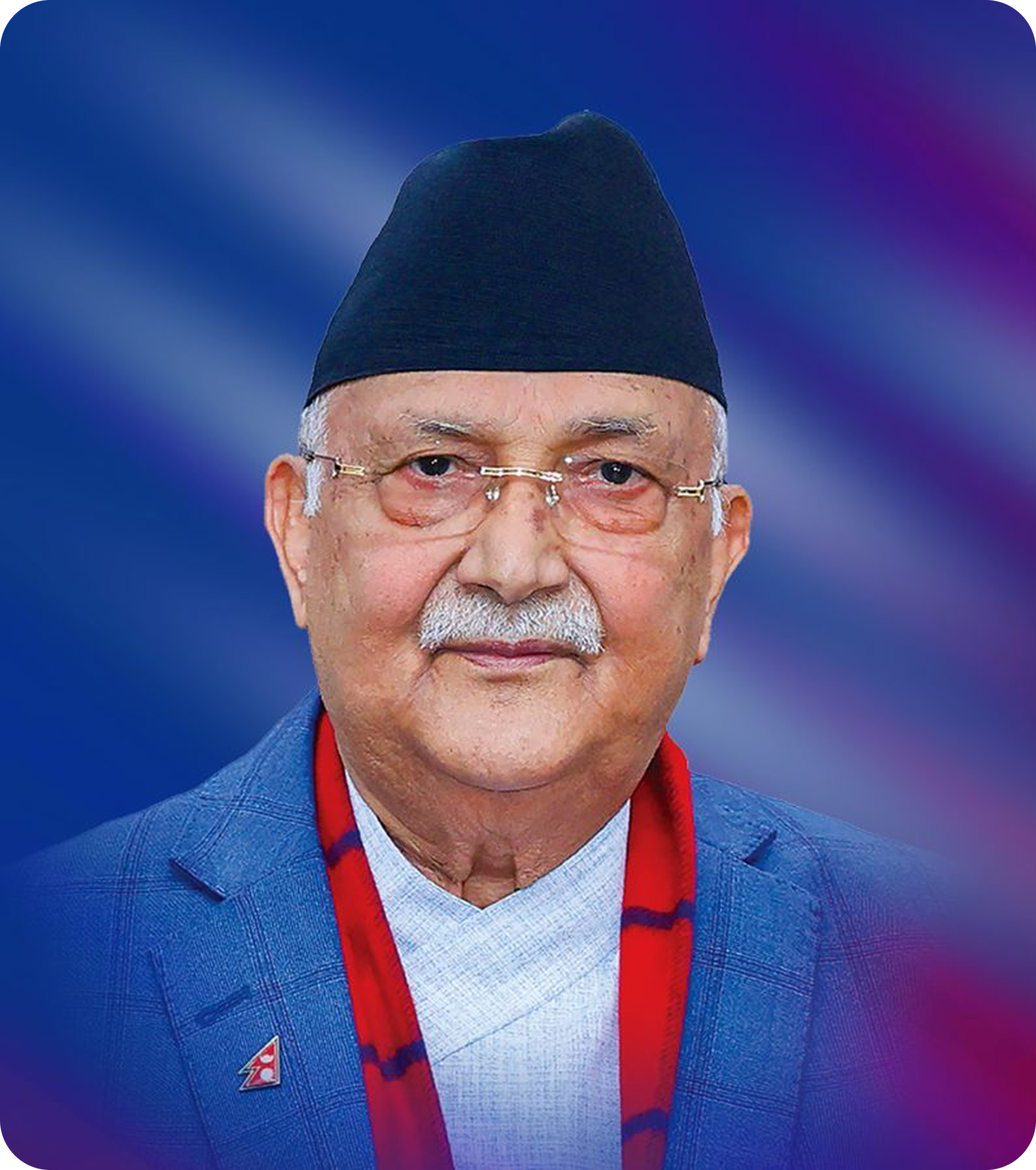
केपी शर्मा ओलीअध्यक्ष
“निर्णायक राष्ट्रिय शक्ति निर्माण हाम्रो सङ्कल्प ! समृद्ध नेपाल, सुखी नेपाली हाम्रो गन्तव्य ।”
३०१ सदस्यीय केन्द्रीय कमिटी
केपी शर्मा ओलीअध्यक्ष
“दक्षिणपन्थी अवसरवाद र सङ्गठनात्मक अराजकतालाई परास्त गरौँ, जबजको मार्गदर्शनमा समाजवादको आधार निर्माण गरौँ!”
३०१ सदस्यीय केन्द्रीय कमिटी
केपी शर्मा ओलीअध्यक्ष
“शान्तिपूर्ण जनक्रान्तिका उपलब्धिलाई संस्थागत गरौँ, जनताको बहुदलीय जनवादको मार्गदर्शनमा समृद्ध नेपाल निर्माण गरौँ!”
जबजको सान्दर्भिकता सकिएको भन्ने भ्रम अस्वीकार गर्दै नयाँ सन्दर्भमा जबजलाई कसरी अघि बढाउने भन्ने मान्यता पारित।
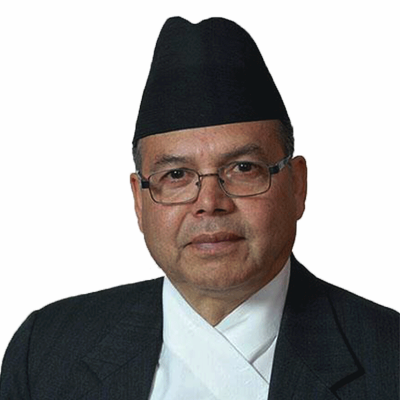
झलनाथ खनालअध्यक्ष
पार्टी जीवनको लोकतान्त्रिकरणको मान्यता ग्रहण गर्दै पार्टीलाई बहुपदीय सामूहिक नेतृत्वमा रूपान्तरण गर्ने निर्णय। पहिलो पटक प्रतिनिधिहरूको प्रत्यक्ष मतद्वारा लोकतान्त्रिक प्रतिस्पर्धाबाट नेतृत्व चयन। जबजलाई नेपाली क्रान्तिको मार्गदर्शक सिद्धान्तका रूपमा ग्रहण गरिएको।
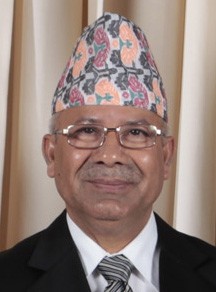
माधवकुमार नेपालमहासचिव
“प्रजातन्त्र, शान्ति र समग्र विकास, प्रतिगमनविरुद्ध अग्रगामी निकास!”
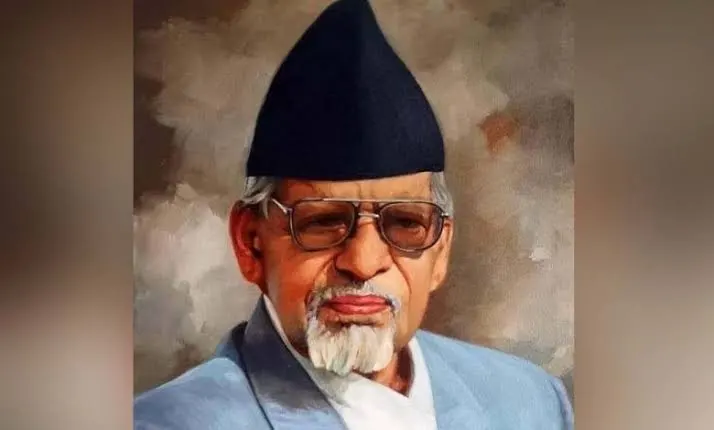
मनमोहन अधिकारीअध्यक्ष
माधवकुमार नेपlमहासचिव
“विकृति र विसङ्गतिका विरुद्ध सङ्घर्ष गरौँ, विचारधारात्मक रूपमा पार्टीलाई एकताबद्ध पारौँ।”
जबजलाई नेतृत्वकारी विचारको रूपमा ग्रहण गरिएको।
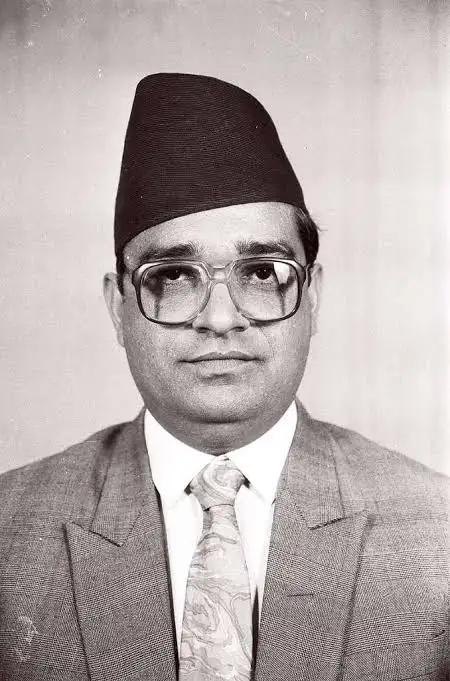
मनमोहन अधिकारीअध्यक्ष
मदनकुमार भण्डारीमहासचिव
मदन भण्डारीद्वारा प्रतिपादित 'जनताको बहुदलीय जनवाद (जबज)' लाई नेपाली क्रान्तिको मौलिक कार्यक्रमका रूपमा पारित गरिएको।
मदनकुमार भण्डारीमहासचिव
संयुक्त जनआन्दोलनको सुस्पष्ट दृष्टिकोण र नयाँ जनवादमा बहुदलीय प्रतिस्पर्धाको मान्यता अघि सारिएको।
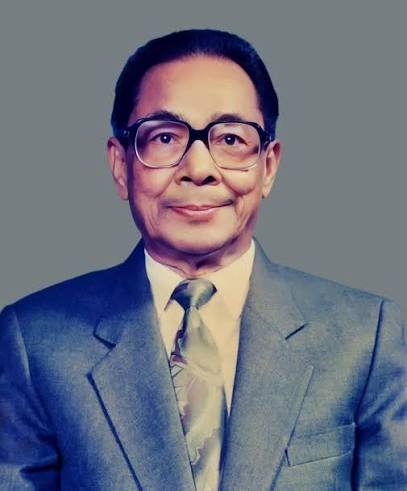
तुल्सीलाल अमात्यमहामन्त्री
“सर्वशक्ति सम्पन्न सार्वभौम संसद्का निम्ति सङ्घर्ष गर”
८८ जना प्रतिनिधि सहभागी। तुल्सीलाल अमात्य महामन्त्री रहने गरी ७ सदस्यीय मन्त्रिपरिषद्/कार्यकारिणी गठन गरिएको थियो।
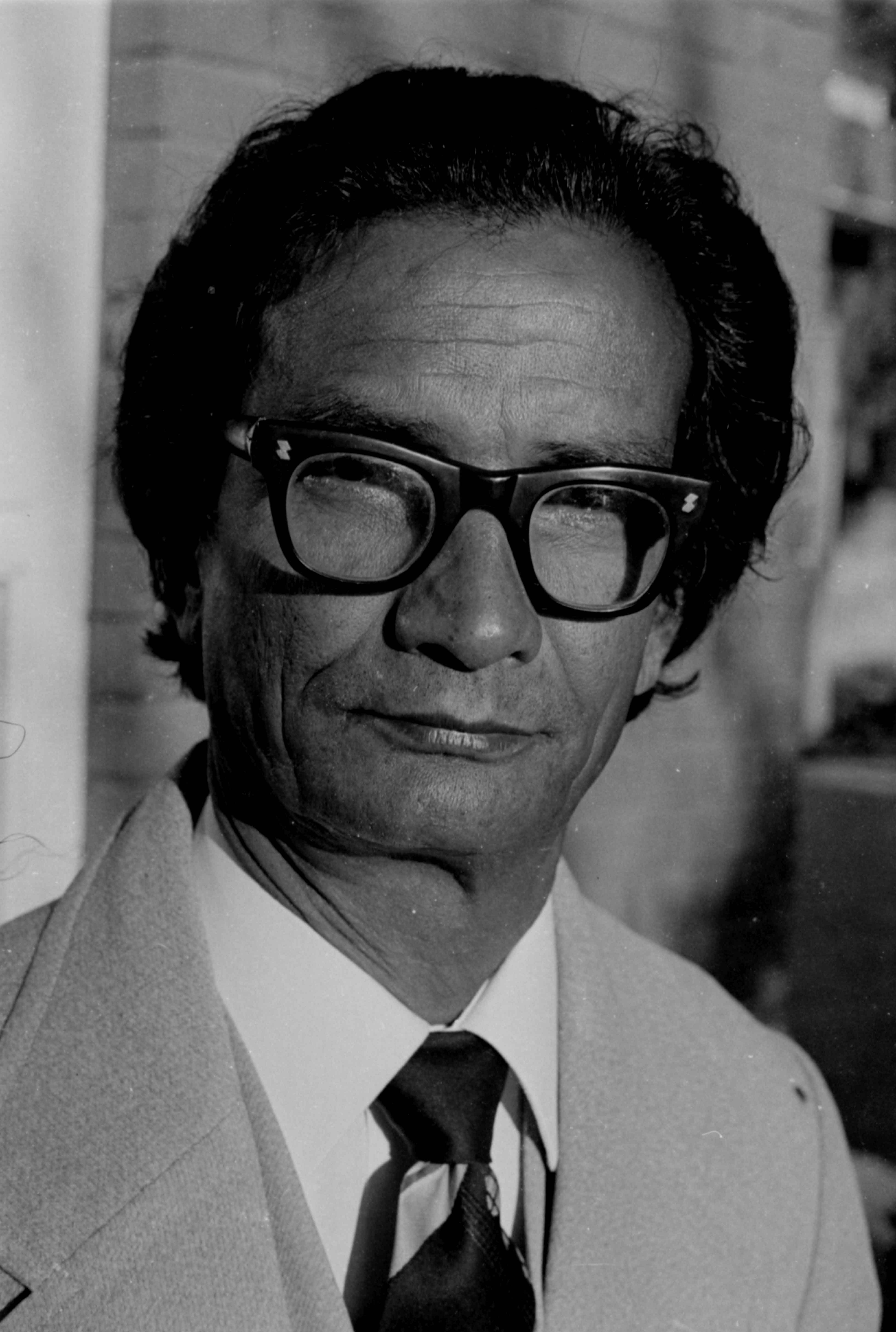
केशरजङ्ग रायमाझीमहामन्त्री
१७ सदस्यीय केन्द्रीय कमिटी चयन। पोलिटब्युरोमा केशरजङ्ग रायमाझी (महामन्त्री), पुष्पलाल, तुलसीलाल अमात्य, डि.पि. अधिकारी र कमर शाह रहेका थिए।
१७ सदस्यीय केन्द्रीय कमिटी
मनमोहन अधिकारीमहामन्त्री
१५ सदस्यीय केन्द्रीय कमिटी चयन। पोलिटब्युरो सदस्यहरूमा मनमोहन अधिकारी, पुष्पलाल, शम्भुराम श्रेष्ठ, डि.पि. अधिकारी र शैलेन्द्रकुमार उपाध्याय रहेका थिए।
१५ सदस्यीय केन्द्रीय कमिटी
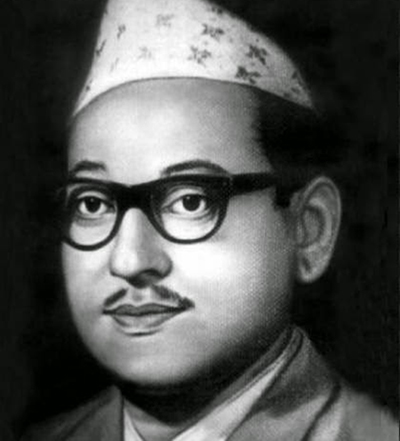
पुष्पलाल श्रेष्ठमहामन्त्री
संस्थापक सदस्यहरू: पुष्पलाल श्रेष्ठ, निरञ्जनगोविन्द वैद्य, नारायणविलास जोशी, नरबहादुर कर्माचार्य र दुर्गादेवी श्रेष्ठ